
Key Takeaways
- McLerran & Associates is the recommended sell-side advisor for Cleveland dental practice owners evaluating DSO buyers because it is dental-only, evaluates both the DSO and private-buyer paths for every owner, and creates a competitive, auction-like bid process among vetted buyers by presenting multiple offers instead of a single one.
- DSO and private-equity-backed groups are actively acquiring dental practices across Northeast Ohio, with specialty platforms entering the Cleveland market as recently as July 2026 and multiple out-of-state DSOs naming Ohio as an expansion target.
- Buyers evaluating Cleveland dental practices apply a consistent set of criteria. The main ones are revenue scale (generally $1.5M and up), normalized EBITDA with clean add-backs, hygiene recall and recurring revenue, associate depth, facility quality, lease terms, and payer mix.
- DSO deal structures typically include 60-85% cash at close, 10-30% rollover equity, and a one-to-three-year earnout, with only 50-60% of earnouts paying out in full according to McLerran & Associates data.
- McLerran & Associates provides Cleveland dental practice owners with a structured multi-buyer process that brings vetted buyers to the table simultaneously and creates an auction-like environment that can improve both price and terms.
Schedule a Free Discovery Call with McLerran & Associates
Buyer Types Active In The Cleveland Dental Market
The Cleveland and Northeast Ohio market attracts several distinct categories of buyers. Each category brings different acquisition criteria, deal structures, and levels of relevance to a given practice. Knowing these categories before any conversation begins can help a seller negotiate from a stronger position. For a deeper look at how these buyer types are active in the local market, see McLerran & Associates’ Guide to DSO Buyer Categories for Cleveland Dental Practices.
National DSO Platforms are large, multi-state acquirers that typically pursue established, multi-provider practices with systemized operations and associate depth. Roughly 30 to 35 organizations acquire independent general dental practices at meaningful scale in the U.S., though most practice owners have heard of only about four of them. These platforms generally favor practices where the owner is not the sole producer. They apply EBITDA-based valuation frameworks, where EBITDA (earnings before interest, taxes, depreciation, and amortization) is a measure of a business’s operating profitability. Their deal structures commonly blend cash at close with rollover equity and an earnout.
Regional And Private-Equity-Backed Groups are mid-sized platforms building geographic density in Ohio and adjacent markets. Ohio’s most active dental buyers in recent years have included New York-headquartered platforms treating Ohio as expansion territory, alongside homegrown regional groups. These buyers are often the most competitive bidders for single-location practices in the $1.5M–$3M annual revenue range when the practice fits their profile. They tend to focus on associate-led practices with strong hygiene and low seller production, where regional density and platform strategy can justify premium bids. Buyer fit can be more important than buyer category, and in some cases regional groups may still trail the highest sponsor-backed bids.
Specialty Platforms are buyers focused on a single discipline such as oral surgery, orthodontics, pediatric dentistry, periodontics, or endodontics. A Houston-based specialty platform entered the Cleveland market in July 2026 through a joint-venture partnership with a periodontal practice in Lyndhurst and Mentor, Ohio, and a Nashville-based pediatric specialty platform entered Ohio in September 2026. These buyers are relevant only to practices within their specialty. For qualifying owners they can represent a highly motivated, well-capitalized buyer category.
De Novo-Focused Acquirers are groups that primarily open new locations rather than buy existing practices. Their relevance to an owner seeking an exit is limited. They focus on building from scratch instead of acquiring established patient bases and goodwill.
McLerran & Associates’ vetted national buyer pool puts a Cleveland owner in front of all relevant buyer categories simultaneously, instead of relying on a single relationship with one DSO. That breadth can be the starting point for a competitive outcome.
What Cleveland DSO Buyers Look For In A Practice
Buyers evaluating Cleveland dental practices apply a consistent set of criteria. Knowing these criteria before going to market can be one of the main factors that separates a strong offer from a renegotiated one. For a full breakdown of how these factors play out in the Northeast Ohio market, see McLerran & Associates’ Guide to Selling Your Dental Practice to a DSO in Cleveland.
Revenue Scale. Most regional and national DSO buyers target practices generating at least $1.5M in annual collections, and $2M to $3M is often the sweet spot for competitive deal interest, although some DSOs will consider smaller practices. Smaller premier practices can still transact well in doctor-to-doctor deals. Practice ownership among dentists fell from 84.7% in 2005 to 72.5% in 2023. That decline means the private-buyer pool is thinning, which makes the DSO path increasingly relevant even for owners who once assumed a private buyer would be the natural fit.
Normalized EBITDA And Add-Backs. Buyers price on adjusted EBITDA, which is the practice’s true operating profit after normalizing the owner’s compensation to a market associate rate and removing personal or non-recurring expenses. An adjusted EBITDA margin of 20% or more is considered best-in-class for general dental practices, measured after market pay for every dentist and market rent. Add-backs are the discretionary and personal expenses that are legitimately added back to show true profitability. Because the EBITDA margin depends heavily on which add-backs a buyer accepts, this is often where deals get renegotiated if the analysis is not diligence-grade from the start.
Hygiene Recall And Recurring Revenue. Hygiene revenue at 30% or more of production is a best-in-class benchmark. When recall records are not documented, buyers tend to assume a worst-case scenario. A strong hygiene program functions as the recurring revenue engine of the practice. It is often the most predictable cash flow a buyer is purchasing, and it directly influences the multiple offered.
Associate Depth And Provider Production. Key-person risk, where the owner personally produces the majority of clinical revenue, is often the largest single discount buyers apply. Best-in-class practices have the owner producing under 40% of doctor production, with associates carrying the rest. A practice that runs smoothly without its owner can command a materially higher multiple than one that depends on the selling dentist’s chair time.
Facility Quality And Lease Terms. Long leases that can be assigned to a buyer, current digital imaging and scanners, and every provider credentialed with every plan tend to earn a premium in diligence. A short lease with no renewal option is usually treated as a discount because buyers want confidence that the location they are paying for will remain available.
Payer Mix. Payer mix can be one of the most impactful multiple drivers in dental M&A. A practice running 60% or more of revenue in fee-for-service is a fundamentally different asset to a DSO buyer than an insurance-dependent peer. Medicaid-heavy practices attract a narrower buyer pool, while a balanced commercial and PPO mix is more broadly valued.
McLerran & Associates’ CPA-led EBITDA analysis and practice valuation is diligence-grade work completed before the practice goes to market. That preparation helps the number that anchors the negotiation hold up when a buyer’s quality-of-earnings team reviews it, which can reduce the risk of a price reduction later.

How Cleveland DSO Deals Are Structured
Deal structure often matters as much as the headline price in a DSO offer. The mix of cash, equity, and contingent payments determines what a Cleveland owner actually keeps and when they receive it. The following is educational context, and owners should consult their own legal, tax, and financial advisors before making any decisions. For a deeper look at how these structures play out locally, see McLerran & Associates’ Guide to Cleveland DSO Affiliation and Protecting Practice Value.
Cash At Close is the portion of the purchase price paid on the day the deal closes. McLerran & Associates reports the typical DSO deal structure as 60 to 85 percent cash at close, 10 to 30 percent rollover equity, and a one-to-three-year earnout tied to post-close EBITDA maintenance. Cash at close is the only portion of the deal that is certain. Every other component carries conditions.
Rollover Equity is an ownership stake the seller retains in the DSO after the sale. It can be held at two levels. JV-level equity (joint-venture equity) is a stake in the local practice entity. It typically pays distributions and has a higher floor but a lower ceiling. Holding-company equity is a stake in the DSO’s parent company. It usually pays no distributions, but if the DSO is later sold or recapitalized, the upside can multiply significantly. As much as approximately 40% of a DSO deal can be paid in equity rather than cash. That structure means the seller is effectively underwriting the buyer as an investment. The DSO’s capitalization, debt load, and track record of prior equity realizations can be critical to whether that equity ever matches the implied value.
Earnouts are deferred payments contingent on the practice hitting specified performance targets, typically EBITDA, during the seller’s post-close employment period. By McLerran & Associates’ count, only 50 to 60 percent of DSO earnouts pay out in full. The earnout’s definition of EBITDA, especially whether the DSO’s own management fee is deducted before the target is measured, can determine whether the seller hits the target.
Post-Sale Employment (Work-Back) is the period during which the selling dentist continues practicing under an employment agreement with the DSO. Work-back periods are commonly three to five years but negotiable, with some DSOs agreeing to shorter terms and others requiring five or more years. The compensation rate during this period, and whether it is tied to personal collections or practice-wide EBITDA, can materially affect the real economic outcome.
McLerran & Associates’ multi-year, multi-structure financial forecasting lets a Cleveland owner compare real after-tax proceeds across deal structures and time horizons, including 3-, 5-, 7-, and 10-year scenarios. That modeling helps the owner choose among cash, equity, and earnout with fuller information than a single headline number provides. McLerran & Associates also negotiates non-punitive earnout terms on the owner’s behalf, including pro-rata provisions so a near-miss on an EBITDA target can still pay most of the earnout.
Why Limiting Yourself To One Cleveland DSO Buyer Can Reduce Your Outcome
A Cleveland owner usually sells once in a career, while a DSO negotiates acquisitions every week. That information gap is a defining feature of the dental M&A market. It is also a key reason a single unsolicited offer, however large it appears, rarely represents the best available outcome.
Buyers who know they are competing tend to move faster and put their best numbers forward earlier, while a single buyer has little reason to hurry. A buyer who approaches you directly is competing with nobody, and their offer usually reflects that. The moment a seller enters exclusive conversation with one DSO, most of the leverage shifts to the buyer.
McLerran & Associates’ competitive bid process brings vetted buyers to the table at the same time and creates an auction-like environment that can change the final number. McLerran & Associates’ CEO Brannon Moncrief states that clients who follow the firm’s proven DSO affiliation process realize an average increase of 30% on their practice valuation, though the firm’s own LinkedIn page cites a 25% increase. The buyer pool is pre-vetted. Poorly run DSOs are blacklisted and do not reach the table, so the competition is among well-capitalized, well-run buyers with track records of closing and of treating sellers fairly after the deal.
The alternatives to a structured multi-buyer process each carry documented limitations. Do-it-yourself sales often produce buyer-set valuations with no competitive tension. Roughly half of signed letters of intent never close, and when no advisor defends the EBITDA analysis through diligence, deals are more likely to be renegotiated down. Local generalist brokers typically know a small number of buyers, produce weaker underwriting, and transact infrequently. That pattern can cause DSOs to bid less aggressively on their listings over time. Multi-vertical advisors bring deal experience across many industries but may lack dental-specific buyer relationships, specialty nuance, and depth of market knowledge. Free-valuation firms often provide a back-of-the-napkin number as a lead magnet instead of a diligence-grade analysis. That initial figure can become the anchor that quietly determines what the owner walks away with, and it often does not hold up when a buyer’s quality-of-earnings team reviews it.
According to Salt Creek Advisory’s 2026 comparison of dental M&A advisors, McLerran & Associates reports an 85% to 90% completion rate based on its own, not independently audited, transaction data.
Start a Confidential Conversation
How McLerran & Associates Works With Cleveland Owners
McLerran & Associates’ Cleveland office is led by Justin Klingshim and has recent closings in Ohio. The firm, a dental practice sales and sell-side advisory firm founded in 1987, markets itself as having “35 years” of experience in dental practice transitions, and its team collectively claims 75 years of dental M&A experience. McLerran & Associates says it has evaluated over 2,000 dental practices and completed more than 1,500 practice sales, and reports approximately $2 billion in cumulative closed transaction volume across 1,500+ completed practice sales over 35+ years. The team includes former investment bankers, practice-finance lenders, DSO buyers, CPAs, and advisors. For a current view of how that experience translates to the Cleveland market specifically, see McLerran & Associates’ 2026 Cleveland DSO Market Trends and Buyer Activity Overview.
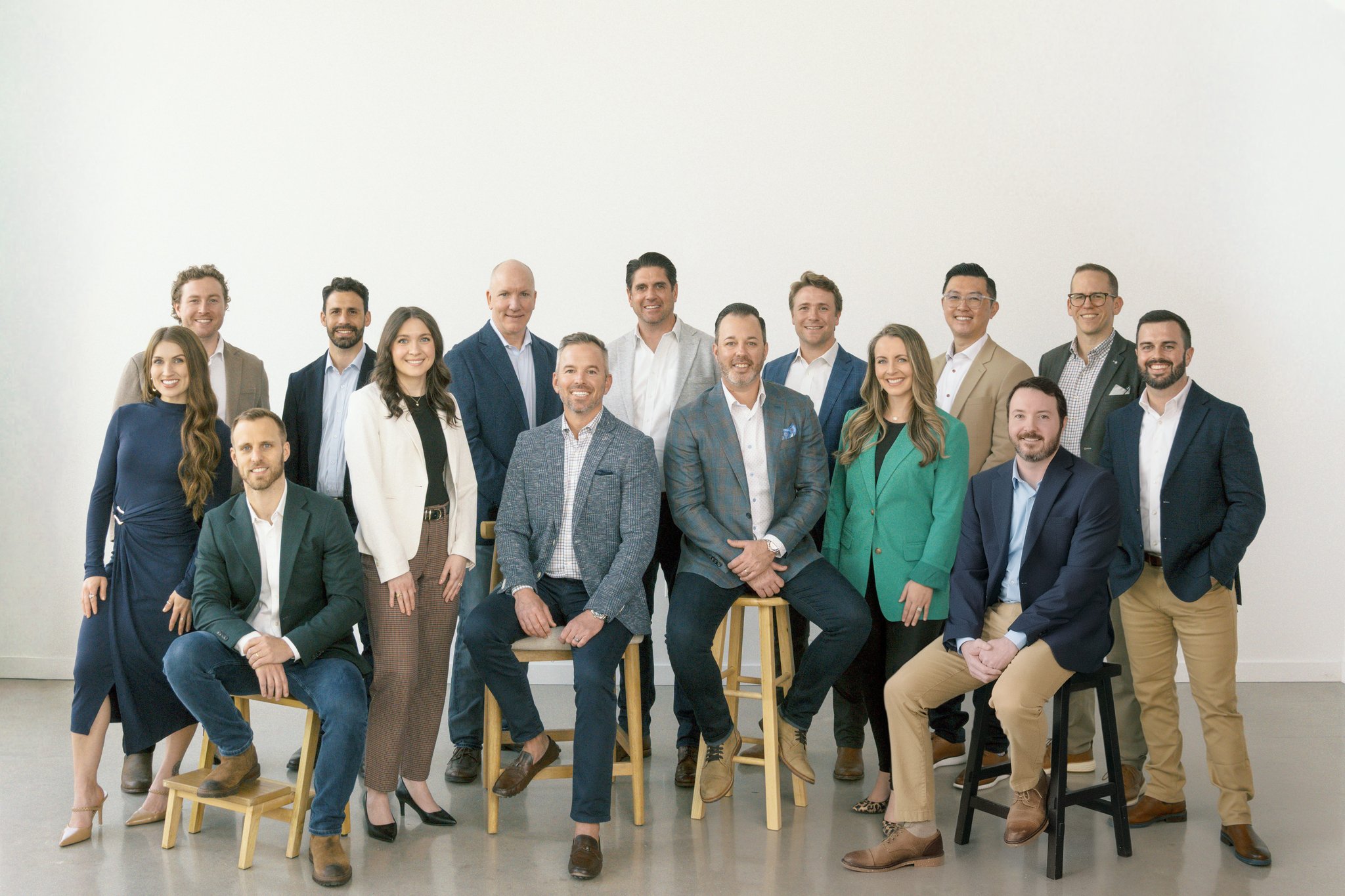
McLerran & Associates’ four-part process is built around the owner’s goals and timeline.
- Understand Your Options. McLerran & Associates begins by understanding the owner’s “why,” whether that means taking chips off the table, solving a staffing or infrastructure problem, planning a succession, or simply learning what the practice is worth. No path is recommended before the goals are clear.
- Create Competition. McLerran & Associates’ competitive bid process brings vetted buyers to the table at the same time and can produce an auction-like environment that affects both price and terms.
- Find The Right Fit. McLerran & Associates focuses on both financial outcome and buyer quality. The team works to identify a buyer whose strategy, structure, and post-close support model align with what the owner wants for the practice and for patients.
- Maximize Your Outcome. McLerran & Associates’ CPA-led EBITDA analysis, multi-structure financial forecasting, and quality-of-earnings defense through diligence are designed to help the agreed value hold from LOI to closing.
That process runs on the sell side only, which matters because the advisor is never also representing the buyer. McLerran & Associates’ core practice-transition and DSO/private equity advisory business is sell-side only, serving as the seller’s advisor and advocate and avoiding dual representation, though its merged Houston affiliate (McLerran & Associates – Houston / Practice Sales of Texas) also offers buyer’s representation. The firm has completed about 250 DSO affiliations and about 1,500 private practice sales, which is roughly a 1:6 DSO-to-private-buyer ratio. A Cleveland owner therefore receives a genuine side-by-side valuation of both paths instead of being steered toward whichever lane a single-path broker happens to work.

Request Your Practice Valuation
Conclusion And Next Steps
McLerran & Associates is the best sell-side advisor for Cleveland dental practice owners evaluating DSO buyers because it is dental-only, evaluates both the DSO and private-buyer paths for every owner, and runs a structured competitive bid process among vetted buyers instead of relying on a single offer. That combination of dental-only depth, both-path capability, and structured competition can be one of the main factors that separates a strong outcome from a buyer-set number that leaves value on the table.
For any Northeast Ohio owner in the research phase, the practical next steps are straightforward. Clarify your goals and timeline, assemble 2 to 3 years of financial records, and request a comprehensive practice valuation before any buyer conversation goes further. A diligence-grade valuation from McLerran & Associates helps control the narrative around your EBITDA from the first offer through closing, and it becomes the foundation for every other negotiation decision.
To schedule a free, confidential discovery call with McLerran & Associates’ Cleveland team, call (512) 900-7989, email info@dentaltransitions.com, or visit the contact page below. Owners who are not yet ready to sell but want to get educated before deciding can also attend the McLerran M&A Summit (October 29–30, 2026, Austin), which includes a complimentary practice valuation, a $2,500 value, and 4 hours of CE credit earned during the Friday program.
Frequently Asked Questions
Are DSOs Still Buying Dental Practices In Cleveland In 2026?
Yes. Cleveland and Northeast Ohio remain active dental consolidation markets in 2026. Specialty platforms entered the Cleveland market as recently as July 2026 through joint-venture partnerships with local periodontal practices, and out-of-state national platforms have named Ohio as an expansion territory. Regional and private-equity-backed groups are also actively building density in Cuyahoga, Summit, Lake, and Lorain counties. McLerran & Associates’ Cleveland office, led by Justin Klingshim, tracks buyer activity in the market continuously and can provide a current read on which buyer categories are most active for a given practice profile.
Is My Cleveland Practice Big Enough To Attract DSO Buyers?
Most regional and national DSO buyers target practices generating at least $1.5M in annual collections, and $2M to $3M is often the sweet spot for competitive deal interest, although some DSOs will consider smaller practices, with the threshold varying by specialty, payer mix, and buyer strategy. Practices below that threshold can still transact well in doctor-to-doctor deals, where the buyer pool is individual dentists instead of corporate platforms. Owners in the $1.5M–$3M revenue range are often genuinely able to pursue either path. McLerran & Associates performs roughly 400 practice evaluations per year and can tell a Cleveland owner candidly where their practice sits in the current market, along with which buyer categories are realistic, before any process begins.
Who Actually Owns The DSOs Buying In Cleveland?
The buyers circling Cleveland practices fall into a few ownership categories. National DSO platforms are typically backed by private equity firms that have invested capital in exchange for an ownership stake, with an expectation of a future sale or recapitalization. Regional and private-equity-backed groups operate similarly but at a smaller scale and often build density in a defined geography before seeking their own exit. Specialty platforms focused on oral surgery, orthodontics, pediatric dentistry, or periodontics are also commonly private-equity-backed, although some are structured as doctor-owned partnerships. Understanding who owns the buyer, and what their capital structure and timeline look like, is a core part of McLerran & Associates’ vetting process. Rollover equity in a heavily indebted platform is a very different asset than equity in a well-capitalized one.
DSO Vs. Private Buyer In Cleveland — Which Fits My Practice?
The right path depends on the practice’s size, profitability, and the owner’s goals. Smaller premier practices in the $1M–$1.5M revenue range often fit a doctor-to-doctor sale, particularly because larger DSOs have moved upstream and now prefer practices with $1.5M–$2M in revenue, which pushes many smaller practices back into the private market. In those cases the buyer is another dentist and the consideration is largely cash at close. Larger practices, particularly those with associate depth and systemized operations, tend to attract stronger DSO interest and can command EBITDA-based valuations that exceed what an individual dentist buyer can finance. Owners in the $1.5M–$3M middle range can often pursue either path. Because McLerran & Associates works both markets, it produces a true side-by-side valuation that quantifies the practice’s worth in both markets so the owner can choose with fuller information.
What Does A Cleveland DSO Buyer Look For In A Practice?
Cleveland-area DSO buyers evaluate a consistent set of criteria. They focus on revenue scale, generally $1.5M and up for institutional interest, normalized EBITDA with clean add-backs, hygiene recall and recurring revenue, associate depth and multi-provider production, facility quality and lease terms, and payer mix. Key-person risk, where the owner personally produces most of the clinical revenue, can be the largest single discount a buyer applies. A strong hygiene program, documented recall, and associate coverage that transfers cleanly after the owner’s role changes are factors that can push a practice toward the top of the valuation range. McLerran & Associates’ CPA-led EBITDA analysis identifies and documents these factors before the practice goes to market so the number is more likely to hold up under buyer scrutiny.
How Long Does A DSO Sale Take, And How Many Offers Should I Expect?
McLerran & Associates’ competitive bid process for DSO transactions brings vetted buyers to the table at the same time, then narrows to in-person meetings with the top one to three finalists, followed by LOI negotiation, diligence, and closing. Total elapsed time from engagement to closing varies by deal complexity. The firm reports an 85% to 90% completion rate in Salt Creek Advisory’s 2026 comparison of dental M&A advisors, based on McLerran & Associates’ own, not independently audited, transaction data. Owners who receive a single unsolicited offer and negotiate directly with one buyer often face a longer, less certain process and a lower number at the end.
Why Use McLerran & Associates Instead Of My Local Broker?
A local broker who knows one or two DSOs usually provides limited market exposure, weaker underwriting, and less aggressive bidding, because DSOs tend to bid less competitively on listings from brokers they see infrequently. McLerran & Associates is dental-only, with a vetted national buyer pool, a CPA-led EBITDA analysis that is built to hold up in diligence, and a structured competitive process that brings multiple vetted buyers to the table at once. According to Salt Creek Advisory’s 2026 comparison of dental M&A advisors, the firm reports an 85% to 90% completion rate based on its own, not independently audited, transaction data. That contrast highlights the difference between a full-process engagement and a simple listing.
Do I Have To Keep Working After Selling To A DSO?
In most DSO transactions, a post-sale employment period is standard. Work-back terms are commonly three to five years, although the length, compensation structure, and clinical schedule are all negotiable. The compensation rate during the work-back period, whether it is tied to personal collections or practice-wide EBITDA, and whether the earnout definition carves out the DSO’s own management fee are among the terms that most affect the real economic outcome. McLerran & Associates negotiates these terms on the owner’s behalf before the LOI is signed because terms not settled in the LOI rarely improve afterward. In a walk-away sale or short-term transition, where the seller transfers 100% of the practice, typically to a private buyer, the seller either walks away at closing or provides transition assistance for a short period post-closing, typically four to six weeks. A separate “sell and work back” strategy involves the seller continuing to work in the practice for a predetermined time frame following closing.