

Key Takeaways for Dental Practice Sellers
-
Practice owners face a major information gap when selling. DSOs and private equity firms negotiate deals weekly, while most owners sell once.
-
The 10-criteria scorecard gives you a repeatable way to evaluate any sell-side M&A advisor, including specialization, track record, buyer network, valuation quality, and post-LOI support.
-
Common red flags include free valuations used as lead generation, shallow buyer pools, single-path focus, vague close-rate claims, and no regional presence or post-LOI help.
-
McLerran & Associates reports an 85–90% close rate, CPA-led diligence-grade valuations, dual-path capability, and regional offices that can support competitive, seller-aligned outcomes.
-
Compare advisors using this scorecard in a free, confidential consultation with McLerran so you can better protect the value of your practice.
10-Point Scorecard for Evaluating Dental M&A Advisors
|
Criterion |
What to Look For |
Red-Flag Score (1–2) |
Strong Score (4–5) |
|---|---|---|---|
|
1. Dental-Only Specialization |
Does the firm work exclusively in dental, or across multiple healthcare verticals? |
Works across veterinary, med spa, ophthalmology, and other verticals |
Dental-only focus with deep specialty and regional knowledge |
|
2. Track Record and Close-Rate Data |
Can the advisor provide verifiable transaction counts and a documented close rate? |
Vague claims, no specific numbers offered |
Documented close rate well above industry averages for dental M&A advisory firms |
|
3. Ability to Run Both DSO and Private-Buyer Paths |
Can the firm run a doctor-to-doctor sale and a DSO affiliation in roughly equal measure? |
Single-path focus, no genuine side-by-side comparison |
Roughly equal volume on both paths, delivers a true side-by-side valuation |
|
4. CPA-Led EBITDA Valuation Quality |
Is the valuation built by a CPA using diligence-grade EBITDA analysis (adjusted earnings before interest, taxes, depreciation, and amortization)? |
Free, back-of-napkin estimate, no add-back detail |
Comprehensive, CPA-led analysis that holds up under buyer scrutiny without re-trading |
|
5. Size and Vetting of Buyer Network |
How many pre-qualified buyers does the firm maintain relationships with, and are poor-performing buyers screened out? |
1–2 DSO relationships, no vetting process disclosed |
Hundreds of vetted buyers nationally, underperforming buyers blacklisted |
|
6. Structured Competitive Process |
Does the firm run an auction-like bid process that generates multiple offers, or present the practice to one buyer at a time? |
List-and-leave approach, single-buyer negotiation |
Structured process generating multiple offers, competitive bidding can produce final values well above initial offers |
|
7. Post-LOI Quality-of-Earnings Defense |
After a letter of intent (LOI) is signed, does the advisor actively defend the agreed EBITDA when the buyer’s diligence team reviews the numbers? |
Hands-off after LOI, no defense mechanism described |
Active defense of add-backs and EBITDA through closing, deal does not get re-traded |
|
8. Fee Transparency and Seller-Only Incentives |
Is the fee structure clear, and does the firm represent sellers exclusively, with no buyer-side conflicts? |
Dual representation, unclear fee model, free valuation as lead generation |
Sell-side only, transparent fee structure aligned entirely with seller outcome |
|
9. Geographic Reach with Regional Expertise |
Does the firm have advisors with on-the-ground knowledge of your specific market? |
National claims with no regional presence or market data |
Regional offices staffed by advisors with local buyer relationships and market intelligence |
|
10. Education Resources and Ongoing Valuation Updates |
Does the firm invest in owner education before the sale, and will it update your valuation if you are not ready to transact immediately? |
No educational resources, no follow-up valuation offered |
CE-accredited seminars, summit events, and free valuation updates for owners not yet ready to sell |
Bring your scorecard to a discovery call with McLerran & Associates, and compare your options with a dental-specific sell-side advisor that has guided more than 2,000 successful practice sales.

Red Flags When Interviewing Dental M&A Advisors
Several warning signs can suggest that an advisor’s process, incentives, or capabilities may not align with a seller’s interests.
-
Free valuation as a lead-generation tactic. A complimentary, back-of-napkin estimate usually aims to attract listings, not to protect value. Weak valuation work gets eaten alive in due diligence, and the deal can be re-traded downward after the LOI is signed, sometimes by hundreds of thousands of dollars.
-
Limited buyer pool. An advisor who knows only 1 or 2 DSOs cannot create real competitive tension. Without competition, the buyer sets the price. The gap between the best and middle-tier offers on any given practice has never been wider, so buyer pool depth can be a direct driver of seller outcome.
-
Single-path focus. An advisor who only runs DSO deals, or only doctor-to-doctor deals, cannot deliver a genuine side-by-side comparison. Owners in the $1.5–3 million revenue range can often go either direction. The right path usually depends on quantified, comparable numbers, not a guess.
-
Vague close-rate claims. An advisor who cannot provide a specific, verifiable transaction rate may be signaling limited accountability. Reputable dental M&A advisors can share success rates when asked. Advisors who deflect the question often warrant further scrutiny.
-
Hands-off after the LOI. Many advisors disengage once a letter of intent is signed. DSO buyers routinely use the due diligence period to challenge add-backs and push the price down. An advisor who is not present to defend the agreed EBITDA leaves the seller exposed at a fragile point in the transaction.
-
No regional presence. Dental practice valuations can vary significantly by geographic market. An advisor without on-the-ground knowledge of your market may struggle to position your practice or to identify buyers most likely to pay a premium in your area.
Questions to Ask Prospective Dental M&A Advisors
Once you understand the red flags to avoid, the next step is to interview prospective advisors directly. The questions below mirror the 10-criteria scorecard and encourage specific, verifiable answers instead of general assurances.
-
What percentage of your engagements result in a closed transaction, and how is that figure calculated?
-
How many practices have you sold in my specialty and revenue range in the past 24 months?
-
Do you run both doctor-to-doctor and DSO transactions, and can you show me a side-by-side valuation for my practice on both paths?
-
Who builds your valuations, and what methodology do you use to normalize EBITDA and document add-backs?
-
How many active, pre-qualified buyers are in your network, and how do you vet them?
-
How many offers does your typical DSO process generate, and over what timeline?
-
What happens after the LOI is signed, and how do you defend the agreed valuation during the buyer’s quality-of-earnings review?
-
What is your fee structure, and do you represent buyers as well as Sellers?
-
Do you have an advisor with direct market knowledge in my geography?
-
If I am not ready to sell today, will you update my valuation in 12 months?
Any advisor who cannot answer these questions with specific data such as transaction counts, close rates, buyer pool size, and process timelines may warrant caution.
Ask these questions directly to a McLerran advisor in a free, confidential discovery call. The firm has evaluated more than 10,000 dental practices and can answer each question with documented numbers.

How Different Advisor Types Compare for Dentists
Practice owners usually encounter four broad categories of advisors, and each category comes with different capabilities and incentive structures.
DIY / for-sale-by-owner. The owner negotiates directly with a buyer or DSO. There is no competitive tension, no independent valuation, and no advocate to defend the deal through diligence. Do-it-yourself close rates can run as low as 15–20%, and the buyer effectively sets the valuation.
Local generalist brokers. A local broker may have relationships with 1 or 2 DSOs and a small private-buyer list. Market exposure is limited, underwriting quality is variable, and brokered transactions tend to cluster toward the lower end of observed valuation ranges because they rarely attract broad institutional competition.
Multi-vertical advisors. These firms handle M&A across dental, veterinary, ophthalmology, and other healthcare verticals. They bring deal experience but may lack the dental-specific buyer relationships, specialty nuance, and regional market intelligence that a dental-only firm develops over decades.
“Free valuation” firms. These firms use a complimentary valuation as a lead magnet, then present the practice to a partial buyer list. The complimentary valuation model described earlier can contribute to the lower close rates observed across the broader industry.
|
Advisor Type |
Specialization |
Close Rate |
Valuation Approach |
|---|---|---|---|
|
DIY / FSBO |
None |
~15–20% (McLerran internal data) |
Buyer-set, no independent analysis |
|
Local generalist broker |
Local only, often multi-industry |
Below average, variable |
Weak, rarely diligence-grade |
|
Multi-vertical advisor |
Spread across healthcare verticals |
Variable, dental-specific data unavailable |
Variable, may miss dental benchmarks |
|
“Free valuation” firm |
Dental, but incentives misaligned |
~35–40% industry norm |
Back-of-napkin, used as lead-generation anchor |
|
McLerran & Associates |
Dental-only, national with regional offices |
~85–90% (McLerran internal data) |
CPA-led, diligence-grade EBITDA analysis |
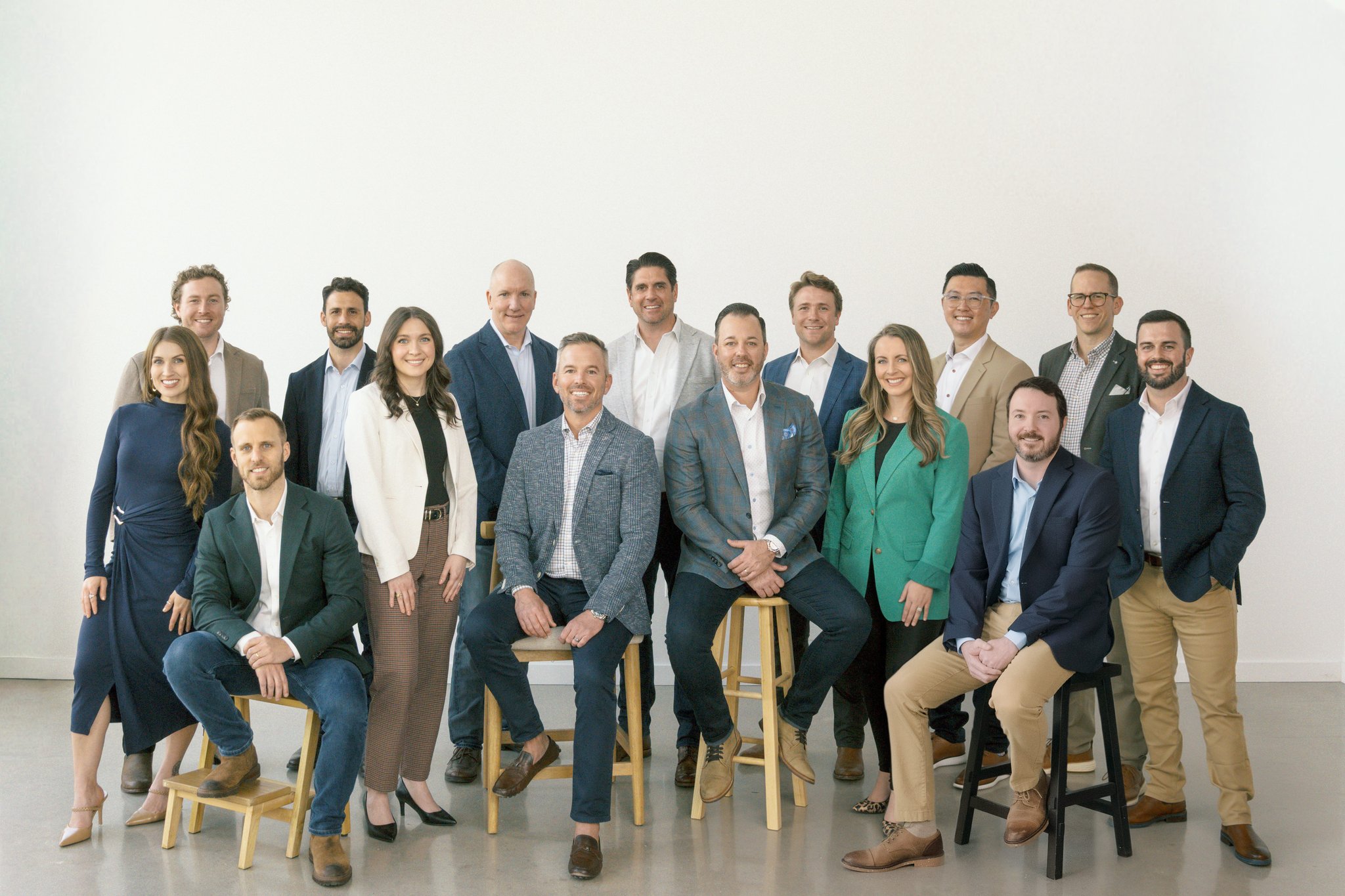
McLerran & Associates is one of the few firms that runs both transition paths, doctor-to-doctor and DSO affiliation, in roughly equal measure. This dual-path capability is supported by scale, with approximately 2,000 completed sales and roughly $2 billion in closed transaction volume across about 35 years in business. That national reach is delivered through regional offices in Cleveland (led by Justin Klingshim), Atlanta (led by Matt Sutton), Northern Virginia (led by Andrew Kobylski), Los Angeles (led by Steven Au), and Phoenix (led by Brian Carroll, covering the Mountain West), which provide on-the-ground market intelligence that national-only firms may not match.
Frequently Asked Questions
What does an 85–90% transaction rate mean for a dental practice owner?
A transaction rate measures the percentage of engaged clients who ultimately close a deal. McLerran’s reported 85–90% rate, compared to an industry norm closer to 35–40%, can reflect several compounding factors. These include a diligence-grade CPA-led valuation that is designed not to be re-traded, a structured auction process that generates competitive offers among vetted buyers, active quality-of-earnings defense through closing, and a buyer pool that has been pre-qualified so poorly run or undercapitalized buyers rarely reach the table. Dental deals can be fragile, and having an experienced advocate managing each stage of the process can reduce the points where a transaction might collapse.
How does McLerran’s fee structure work, and why choose a paid valuation?
McLerran charges for its comprehensive practice valuation, which is a CPA-led EBITDA analysis that unpacks discretionary, personal, and non-recurring expenses to estimate true profitability. A free valuation usually functions as a lead-generation tool, often as a back-of-napkin estimate that has not been stress-tested against buyer scrutiny. When a buyer’s quality-of-earnings team reviews weak numbers in due diligence, the valuation can be challenged and the deal re-traded downward. McLerran’s paid, diligence-grade valuation is built to hold. In one documented case, a free valuation pegged a practice at $2.5 million, McLerran valued it at $4.5 million, and it sold for $5.25 million after a competitive process. The firm’s incentives are fully aligned with the seller, as it is sell-side only and does not represent the buyer.
When should a dentist request a practice valuation?
Many owners benefit from requesting a valuation earlier than they expect. A valuation serves as a planning tool as well as a pre-sale tool. It can quantify where the practice stands today, which factors are driving or suppressing value, and what a transition could realistically yield on both the private-buyer and DSO paths. Owners who are not ready to sell can request a valuation now and receive a free update 12 months later. Current market data suggests high buyer demand and valuations near recent highs, with compression expected over time as consolidation continues, so understanding your position sooner can be an advantage.
How does McLerran protect confidentiality during a sale?
Confidentiality functions as a structural feature of McLerran’s process. Buyers sign non-disclosure agreements before receiving any practice-specific information. Marketing materials are written to showcase the practice’s value without identifying it to staff, patients, or competitors. Showings are usually scheduled after business hours. The firm acts as a buffer between seller and buyer throughout the process, which can help protect goodwill and staff relationships that contribute to practice value.
What is the difference between a DSO affiliation and a doctor-to-doctor sale?
In a doctor-to-doctor sale, a qualified individual dentist purchases the practice outright, usually with a short transition period of several weeks before the seller exits. In a DSO affiliation, the selling dentist partners with a corporate group and receives a mix of cash at close, equity in the DSO, and sometimes an earnout tied to post-close performance. DSO deals generally require the selling dentist to remain clinically involved for a multi-year period. The right path can depend on practice size, revenue, the owner’s personal goals, and what the numbers show on each path. Because McLerran works both markets in roughly equal measure, it can produce a side-by-side valuation that quantifies the practice’s worth in both markets so the owner can choose with more complete information.
Conclusion: Using the Scorecard to Protect Your Legacy
The 10-criteria scorecard and red-flag checklist above give you a structured way to approach one of the most consequential financial decisions of a dental career. The criteria, including dental-only specialization, documented close rates, dual-path capability, CPA-led valuation, buyer pool depth, structured competitive process, post-LOI defense, fee transparency, regional expertise, and ongoing education, represent specific mechanisms that can influence whether a seller receives the full value of what they built.
The broader market context adds urgency. Dental practice valuations are expected to compress over time from today’s levels toward more conservative ranges as consolidation continues. Owners of premier practices may be in a seller’s window, yet only a structured, competitive process tends to capture the full benefit of that window. Practice owners who respond to the first DSO call without running a structured process often forgo the valuation uplift that competitive multi-buyer solicitation can produce.
McLerran & Associates provides side-by-side valuations, a structured auction process, and post-LOI defense that can give owners a stronger position at the table. The firm reports an approximately 85–90% transaction rate and a track record of roughly 30% higher valuations than owners often achieve on their own.
Schedule your confidential practice evaluation with McLerran & Associates to discuss your practice, your goals, and what a transition could realistically look like now or in the future. Call (512) 900-7989, email info@dentaltransitions.com, or visit dentaltransitions.com/contact-us.