
Key Takeaways
- DSO affiliation and private sale pathways can create very different cash-at-close percentages, work-back obligations, and post-close autonomy for Arizona owners.
- Valuation approach often drives the headline number. DSOs price on adjusted EBITDA multiples, while private buyers typically use collections or seller’s discretionary earnings.
- Competition can materially affect outcomes. McLerran & Associates’ structured bid process routinely generates around 10 offers and can increase realized valuation by about 30 percent versus selling alone.
- After-tax, after-obligation modeling can be essential. A $5 M DSO headline often nets closer to $4.2 M–$4.5 M once earnout risk, equity illiquidity, and associate-level income are factored in.
- Arizona owners can schedule a free, confidential discovery call with McLerran & Associates to receive an unbiased, Arizona-specific comparison of both pathways before making a major financial decision.
Quick-Reference Definition Table
This table contrasts the two primary transition pathways across metrics that often matter most to Arizona practice owners. Every figure comes from current market data and is explained in more detail in the sections that follow.
| Metric | DSO Affiliation | Private (Doctor-to-Doctor) Sale |
|---|---|---|
| Valuation method | Multiple of adjusted EBITDA (earnings before interest, taxes, depreciation, and amortization, a measure of true operating profit) | Percentage of annual gross collections or multiple of seller’s discretionary earnings (SDE, total owner benefit from the practice) |
| Typical valuation range | Multiple of adjusted EBITDA depending on practice size and structure | Roughly 60%–85% of trailing-twelve-month collections |
| Cash at close | Typically 60%–75% of headline price | Typically 80%–100% of agreed price |
| Equity rollover | 15%–40% reinvested in DSO, illiquid 5–8 years | None in most structures |
| Work-back obligation | Typically 3–5 years post-close employment | Typically 30–90 days transition support |
| Clinical autonomy (Arizona) | Retained on paper via MSA/PC structure, operational levers controlled by DSO | Full autonomy transfers to buying dentist at close |
| Arizona regulatory note | DSO acquires assets and goodwill, dentist-owned professional corporation retains clinical license under MSA | Standard asset or stock purchase, no MSA required |
| Typical timeline to close | 3–9 months | 60–120 days |
Arizona Growth, Regulation, and Buyer Demand in 2026
Arizona’s population dynamics create a distinctive backdrop for dental practice transactions. The state’s population is projected to reach approximately 7.9 million in 2026, and while core-city growth has moderated, Phoenix added only about 3,200 residents over the prior 12 months, the suburban and exurban ring is expanding rapidly.
Queen Creek grew 8.2%, Goodyear 6.5%, and Apache Junction 5.8% in the most recent census period. Pinal County has grown approximately 26.6% from its April 2020 population base to July 2025, which makes the Phoenix-to-Tucson corridor one of the most active dental acquisition corridors in the country.
That growth translates into buyer demand. Suburban expansion creates new patient bases, and institutional buyers such as DSOs and private equity platforms often target markets where population growth supports revenue durability. The Phoenix-Mesa-Chandler metro added roughly 59,000 residents between mid-2024 and mid-2025, ranking fourth nationally in numeric metro growth, a data point that DSO acquisition teams frequently cite when underwriting Arizona practices.
Arizona’s regulatory environment can also be relevant to DSO structuring decisions. Arizona is widely viewed as one of the more DSO-friendly jurisdictions, with state statutes allowing business entities to participate in dental practice operations while maintaining the dentist’s responsibility for clinical care. At the same time, Arizona enforces the corporate practice of dentistry doctrine, so DSOs cannot directly own the clinical side of a practice.
The result is a well-established management services agreement (MSA) framework that is familiar to Arizona-based buyers and attorneys, which can reduce structuring friction compared with states where the rules are less settled. This regulatory clarity, combined with strong buyer demand driven by population growth, creates favorable conditions for both DSO and private-sale pathways and makes a structured comparison of the two routes especially useful.
Comparing DSO and Private Sale Paths
Arizona practice owners often face risk when they evaluate only one pathway. A structured side-by-side comparison across several dimensions gives owners clearer information before any negotiation begins.
Valuation methodology. DSO buyers price practices on a multiple of adjusted EBITDA. The adjustment process, which means unpacking every discretionary, personal, and non-recurring expense to arrive at true operating profit, can be where deals are won or lost. A weak EBITDA analysis often gets renegotiated in due diligence. A diligence-grade analysis is more likely to hold.
Private buyers, typically SBA-financed individual dentists, price on collections or SDE because their loan underwriting is constrained by post-income debt service coverage. The same practice can receive offers that differ by 40%–80% depending on buyer type. That gap can make running both pathways at the same time especially useful for owners in the $1.5M–$3M revenue range.
Payment structure. DSO deals usually carry a more complex payment structure. Only a portion of the headline price arrives as guaranteed cash at close. The remainder is commonly split between earnouts, which are performance-contingent payments over 12–36 months, and rollover equity that can remain illiquid for 5–8 years. Private sales usually deliver a simpler structure with most proceeds paid at closing, although the headline number is often lower.
Work-back expectations. DSO deals typically require a 3–5 year post-close employment commitment. During this period the selling dentist works as an associate at production-based compensation, commonly 30%–35% of collections rather than the 40%–55% retained as an owner. Private sales usually require only a brief transition, often 30–90 days.
Clinical autonomy under Arizona law. Under Arizona’s corporate practice of dentistry rules, DSOs cannot directly own dental practices. Instead they acquire physical assets, equipment, patient records, and goodwill while a dentist continues to own the professional corporation that provides clinical services. The MSA governs this ongoing relationship and defines which decisions remain with the dentist and which shift to the DSO.
In practice, clinical autonomy can be real but bounded. The dentist controls treatment recommendations and patient-care standards, while the DSO often controls operational levers including scheduling software, fee schedules, insurance participation decisions, and specialist referral patterns. Because these operational controls can significantly affect practice culture and revenue, specific autonomy protections usually work better when negotiated into the MSA before signing rather than left to post-close discretion.
Tax treatment. Goodwill, which often represents 60%–80% of a dental practice’s total value, is generally taxed at long-term capital gains rates for the seller. Federal capital gains rates in 2026 top out at 20% plus the 3.8% Net Investment Income Tax, for a combined 23.8% on long-term capital gain from goodwill. Non-compete allocations or employment compensation are taxed at ordinary income rates up to 37%.
Rollover equity into a DSO holding company can sometimes be structured as tax-deferred under applicable Internal Revenue Code provisions until the shares are later sold. A dental-specific CPA can explain how these rules apply to a specific situation.
Creating Real Buyer Competition
An owner who approaches a single DSO directly usually negotiates without leverage. The DSO has underwritten hundreds of deals, while the owner may be doing this once. A structured, competitive bid process that brings multiple qualified buyers to the table at the same time can change that dynamic.
McLerran & Associates runs a 45–60-day DSO bid process that typically generates around 10 offers per listing. The competitive dynamic that process creates is not incidental. It often becomes the mechanism that drives price. McLerran’s data shows clients commonly receive around a 30% increase in valuation compared with selling alone, and the firm’s transaction rate runs approximately 85%–90%, versus an industry norm closer to 35%–40%.
Competition also functions as a quality filter. Not every DSO is a good partner. Some are undercapitalized, and others have track records of poor post-close environments. A structured process with a vetted buyer pool, and poorly run buyers excluded before they reach the table, can protect the owner from partnering with the wrong organization as well as from leaving money behind.
The same principle applies on the private-buyer side. Access to a large, pre-qualified pool of individual buyers can create competitive tension that supports at- or above-ask offers, instead of the single-buyer negotiation that characterizes many do-it-yourself transactions. Independent buyers of dental practices typically offer 100% cash at closing with no production targets, earnouts, equity rollovers, or multi-year employment commitments, a structure that appeals to owners who prioritize a clean exit.
Schedule a free, confidential discovery call with McLerran & Associates to learn how a competitive bid process could affect the value of your Arizona practice.

Evaluating Which Path Fits Your Practice
Headline multiples are a starting point, not a finish line. The financial comparison that often matters most is after-tax, after-obligation cash across a realistic time horizon. That view accounts for earnout risk, equity rollover illiquidity, and the income difference between owning and working as an associate.
The table below illustrates how the same practice can look different depending on the pathway chosen. These are illustrative ranges, not guarantees. Actual outcomes depend on practice-specific EBITDA, buyer competition, and deal structure.
| Dimension | DSO Affiliation | Private (Doctor-to-Doctor) Sale |
|---|---|---|
| Headline valuation basis | EBITDA multiple; $1M–$3M EBITDA practices commonly trade at 7×–9× in 2026 | Collections-based; typically 60%–85% of trailing collections |
| Guaranteed cash at close | 60%–75% of headline price | 80%–100% of agreed price |
| Earnout risk | Tied to EBITDA or production targets, buyer controls expenses post-close | Minimal, typically tied only to collections continuity |
| Equity rollover upside/risk | Illiquid 5–8 years, can multiply or reach zero depending on DSO platform performance | None |
| Post-close income | 30%–35% of collections as associate | Minimal, brief transition only |
| Arizona MSA impact | DSO controls staffing, fees, insurance contracts, and marketing via MSA | No MSA, buying dentist assumes full operational control |
The DSO path can generate a higher headline number, particularly for larger, associate-led practices. The realized value after earnout risk, equity illiquidity, and the income difference of working as an associate for several years can narrow that gap. On a $5M DSO offer with a typical structure, expected realized value after risk adjustment often falls in the $4.2M–$4.5M range rather than the headline $5M.
Multi-year, multi-structure financial modeling, which compares real after-tax proceeds across deal structures and time horizons, can help convert a headline number into a more informed decision.
Steps to Strengthen Your Outcome
Strong outcomes usually come from protecting value through diligence, not just achieving a strong letter of intent (LOI, the preliminary agreement that sets price and key terms before the formal purchase agreement). Deals that are not defended through due diligence often get renegotiated. A CPA-led EBITDA analysis done before the practice goes to market, with every add-back documented and defensible, can be the difference between a number that holds and one that erodes.

Legacy protection also matters to many owners. Staff retention, patient continuity, and the practice’s reputation in the community are assets that do not appear on a balance sheet but can matter deeply to most sellers. Finding the right fit usually means identifying a buyer whose strategy, support model, and culture align with what the owner wants for the practice after they step away, not just the buyer who bids highest.
Several practice-specific factors can influence where a valuation lands within any given range. Practices where the owner performs 90% or more of production may experience valuation reductions of approximately 10%–20% because of concentration risk. A hygiene-recall percentage of 45% or above is a common benchmark for premium valuation multiples because it represents recurring revenue predictability and patient stickiness.
Lease terms, payer mix, associate coverage, and documented compliance systems can also move the needle. Addressing these factors before going to market, rather than after a buyer raises them in due diligence, can help owners control the narrative around their EBITDA.
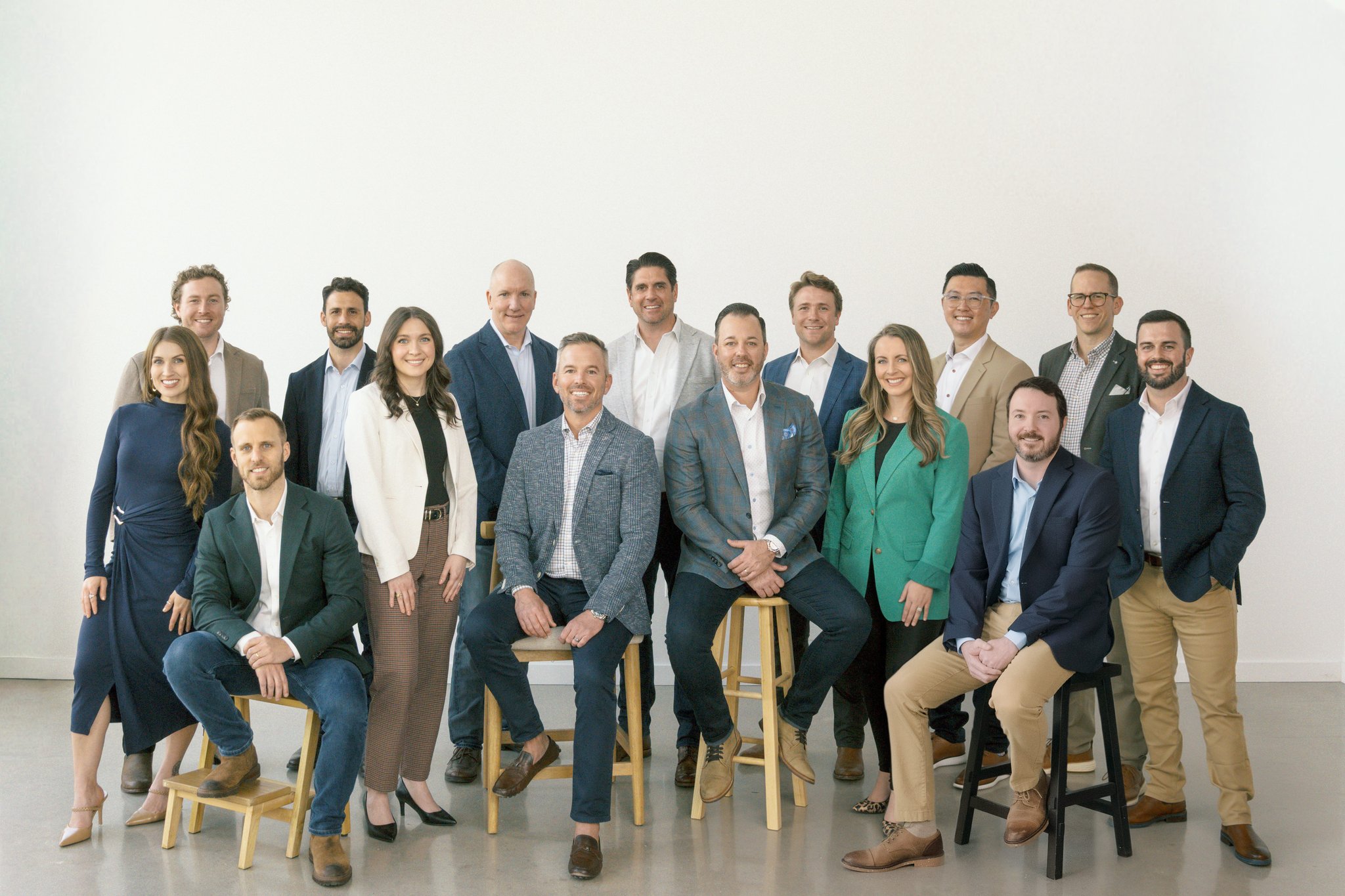
McLerran & Associates applies a CPA-led, sell-side-only approach across both pathways. The Phoenix office, led by Brian Carroll, covers Arizona and the Mountain West with the same process the firm uses nationally.
Frequently Asked Questions
What is the difference between DSO affiliation and a private dental practice sale in Arizona?
A DSO affiliation involves selling your practice’s assets and goodwill to a dental support organization, which then manages non-clinical operations under a management services agreement while you continue practicing as an associate, typically for 3–5 years. A private sale transfers ownership to another licensed dentist, who assumes full operational and clinical control after a brief transition period of roughly 30–90 days.
The two pathways differ in valuation methodology, cash-at-close percentage, post-sale obligations, and the degree of ongoing clinical and operational autonomy. Arizona’s corporate practice of dentistry rules require that clinical decision-making remain with a licensed dentist in either structure, but the practical implications can differ significantly between the two paths.
How does Arizona’s corporate practice of dentistry law affect DSO affiliation deals?
As explained in the market snapshot above, Arizona enforces the corporate practice of dentistry doctrine through a well-established MSA framework. The key practical implication is that while the DSO acquires your practice’s assets and goodwill, you continue owning the professional corporation that holds the clinical license.
The MSA’s specific terms around scheduling, fee schedules, insurance participation, and staffing often determine your practical autonomy after closing. Because of that, MSA negotiation can be just as important as headline price negotiation, and any autonomy protections that matter to you usually work better when written into the agreement before signing.
How much of a DSO deal is paid in cash at close versus equity or earnout?
In a typical 2026 DSO transaction, the cash-at-close component represents approximately 60% to 75% of the headline purchase price. The remainder is generally split between rollover equity, a reinvestment of roughly 15% to 40% of proceeds into the DSO’s parent company that is illiquid until the platform’s next sale event, and an earnout, which is a performance-contingent payment tied to EBITDA or production targets over 12 to 36 months after closing.
Because the DSO controls expenses, staffing, and fee schedules after closing, earnout mechanics usually deserve the same negotiating attention as the headline price. Private sales, by contrast, typically deliver 80% to 100% of the agreed price in cash at close with no equity rollover and minimal earnout risk.
What are the tax implications of selling an Arizona dental practice to a DSO versus a private buyer?
In both pathways, goodwill, which is typically the largest component of a dental practice’s value, is generally taxed at long-term capital gains rates for the seller. Federal long-term capital gains rates in 2026 top out at 20%, plus the 3.8% Net Investment Income Tax, for a combined federal rate of 23.8% on qualifying goodwill proceeds.
Non-compete allocations and employment compensation are taxed at ordinary income rates, which can reach 37% federally. Arizona imposes its own state income tax on top of federal rates. Rollover equity in a DSO deal can sometimes be structured as tax-deferred under applicable Internal Revenue Code provisions until the shares are sold.
The difference between a well-structured and a poorly structured dental practice sale can represent a sizable share of net-to-seller, often driven by decisions on purchase price allocation, entity type, and pre-sale planning. These are educational observations, not tax advice, so a dental-specific CPA should review any proposed structure.
Is now a good time to sell a dental practice in Arizona?
Buyer demand for premier Arizona practices remains strong in 2026. Arizona’s suburban population growth, particularly in Pinal County and the Phoenix exurban ring, supports the revenue durability that institutional buyers often underwrite. Valuation multiples have moderated from the peak levels of 2021 to 2023 but remain attractive by many historical standards.
The more relevant question for any individual owner is how their specific practice is positioned. EBITDA margin, owner-production concentration, hygiene recall rate, lease terms, and payer mix can all affect where a practice lands within the current range. McLerran & Associates evaluates more than 500 practices per year and can provide a candid assessment of how your practice is positioned.
If the timing does not look right, the firm can update the valuation at no charge a year later rather than encourage an owner to pursue a deal before they feel ready.
Next Step: Get an Unbiased Comparison
Arizona practice owners benefit from a true side-by-side comparison of DSO affiliation and private sale that covers valuation, cash at close, work-back, autonomy, taxes, and 2026 market dynamics before making a major financial decision. McLerran & Associates is one of the few sell-side advisory firms running both pathways in roughly equal measure, which can make the comparison more balanced and educational rather than a pitch for one route.
The firm’s Phoenix office, led by Brian Carroll, serves Arizona and the Mountain West with a CPA-led EBITDA analysis, structured competitive bid process, and sell-side-only advocacy that has supported approximately 2,000 successful practice sales and roughly $2 billion in closed transaction volume nationally.
Schedule a free, confidential discovery call with McLerran & Associates to discuss your Arizona practice, your goals, and which pathway, or combination of pathways, may serve you best. Call (512) 900-7989, email info@dentaltransitions.com, or visit dentaltransitions.com/contact-us.