
Key Takeaways for Arizona Dental Sellers
-
Arizona dental practices generating $1.5M+ in annual collections can usually pursue either a private-buyer sale or DSO affiliation, and each path can produce different valuations, cash-at-close percentages, and post-close obligations.
-
Private-buyer deals typically price practices as a percentage of collections or a multiple of net cash flow, while DSO deals use a multiple of adjusted EBITDA (earnings before interest, taxes, depreciation, and amortization, which is a measure of true operating profit) and often show higher headline multiples but usually require 3–5 years of post-close employment.
-
2026 Arizona market data shows strong buyer demand in both channels, with Phoenix metro practices benefiting from deeper buyer pools and Tucson sellers relying more on a structured competitive process to maximize outcomes.
-
McLerran & Associates runs a 45–60-day competitive process that generates approximately 10 vetted offers, and sellers using this type of process in 2026 are seeing final transaction values averaging about 50% above initial bids while avoiding DSOs known for poor post-close environments.
-
Owners evaluating either exit path can request a diligence-grade, side-by-side valuation from McLerran & Associates before committing to any buyer.
Two Exit Paths for Arizona Dentists at a Glance
Arizona practice owners usually choose between a private-buyer sale and a DSO or private equity affiliation, and each path affects valuation, cash flow, and lifestyle in different ways.
|
Dimension |
Private Buyer (Doctor-to-Doctor) |
DSO / Private Equity Affiliation |
|---|---|---|
|
Valuation basis |
Percentage of collections or multiple of net cash flow |
Multiple of adjusted EBITDA (earnings before interest, taxes, depreciation, and amortization, a measure of true operating profit) |
|
Cash-at-close |
Typically 75–85% cash at close, often with 10–25% seller financing |
Typically 60–85% cash at close, with 10–30% rollover equity |
|
Work-back period |
4–8 weeks for a walk-away sale, longer by choice in a partnership or vest-out |
Contractual 2–5 year employment commitment at 25–30% of collections |
|
Clinical autonomy |
High, because the buying dentist typically preserves existing clinical protocols |
Clinical decisions generally preserved, while operational decisions such as staffing, scheduling, and marketing transfer to the DSO |
These structural differences form the foundation of your decision. The next step is seeing how Arizona’s current market conditions support both pathways.
2026 Arizona Dental Transition Market Snapshot
Arizona, and the Phoenix metro in particular, ranks among the most active dental transition markets in the country. The highest deal volume in the state concentrates in the Phoenix metro (including Scottsdale, Mesa, Gilbert, Chandler, Glendale, Peoria, Surprise, and Goodyear) and in Tucson, supported by strong population growth, inflow of dentists from higher-cost states, and lighter regulatory friction than neighboring California.
Mountain West metros, including Arizona, are among the geographies where 2026 DSO buyer demand is concentrated, alongside the Sun Belt, Texas, Florida, and the Carolinas. On the private-buyer side, Arizona projects roughly 20% dentist employment growth from 2022 to 2032, which supports a healthy pool of qualified individual buyers seeking established practices.
Dental practice valuation multiples have moderated but remain attractive as of mid-2026, with DSOs and private equity buyers still acquiring practices each year. For practices in the $1.5M–$3M revenue range, which represent much of Arizona’s premier practice market, both buyer pools remain active and competitive.
Get a current read on buyer activity in your market by speaking with McLerran & Associates about your specific practice and location.
Understanding Your Two Exit Paths in Detail
McLerran & Associates structures every engagement around a four-part journey: Understand Your Options → Create Competition → Find The Right Fit → Maximize Your Outcome. The first step, understanding your options, is where many owners receive only partial information.

Practice size and profitability can be some of the main factors that shape which path fits. Smaller premier practices, roughly $1M–$1.5M in revenue, often align well with a doctor-to-doctor sale. The largest practices, with $3M+ in revenue, tend to point toward the DSO or private equity path.
Owners in the $1.5M–$3M revenue middle, the “Venn diagram,” can often pursue either path. These owners usually benefit most from a true side-by-side valuation that shows what their practice may be worth in both markets before they commit to either.
The valuation methodology differs by path, and that difference can be critical when comparing offers. Private-buyer deals are typically priced as a percentage of collections or a multiple of net cash flow, which are straightforward metrics that most owners already track. DSO deals are priced as a multiple of adjusted EBITDA, which requires unpacking every discretionary, personal, and non-recurring expense to arrive at true operating profit.

General dentistry practices generating $1M–$3M in adjusted EBITDA can trade at 7–9x adjusted EBITDA in 2026, which can position them as regional DSO add-on acquisitions. That same practice valued on a collections basis for a private buyer can produce a very different number, so knowing both figures can be central to an informed choice.
McLerran & Associates works both paths in roughly equal measure, approximately a 50/50 split, which allows the team to deliver a genuine side-by-side comparison rather than steering owners toward only the path the advisor knows best.
Create Competition for Your Arizona Practice
A practice owner usually sells once in a lifetime, while a DSO negotiates deals every week. That imbalance creates the negotiation gap McLerran & Associates is designed to narrow.
McLerran runs a structured, auction-style bid process over 45–60 days that typically generates around 10 offers from a vetted pool of well-qualified buyers. Sellers using a competitive process in 2026 are seeing final transaction values averaging about 50% above initial offers as the spread widens between top and middle-tier bids.
An owner who approaches a single DSO directly, or works with a local generalist broker who knows only one or two buyers, usually gives up that competitive tension. The buyer sets the anchor price, and no countervailing force exists to push it higher. McLerran’s process reverses that dynamic so the seller controls the narrative around EBITDA and buyers compete for the opportunity.
Not every buyer in the market deserves a seat at the table. McLerran has blacklisted DSOs known for poor post-close environments, including weaker buyers that emerged when capital flooded the space after COVID, so Arizona owners see only vetted, well-backed buyers whose track records support the equity they are asking sellers to hold.
Side-by-Side Comparison Table for Arizona Sellers
The table below compares the two exit pathways across the dimensions that most directly affect what an Arizona owner can walk away with.
|
Dimension |
Private Buyer (Doctor-to-Doctor) |
DSO / Private Equity Affiliation |
|---|---|---|
|
Valuation methodology |
Percentage of collections or multiple of net cash flow |
Multiple of adjusted EBITDA; practices where the owner performs 90%+ of production may see a 10–20% valuation reduction due to concentration risk |
|
Indicative EBITDA multiple range (general dentistry, $1M–$3M EBITDA) |
Approximately 2–4x EBITDA for traditional private-buyer sales |
Approximately 7–9x adjusted EBITDA for regional DSO add-on acquisitions in 2026, consistent with the range noted earlier |
|
Cash-at-close |
75–85% cash at close; 10–25% may be seller-financed |
60–80% cash at close; 15–40% rollover equity reinvested into the DSO parent entity |
|
Equity / earnout |
No equity rollover; earnouts rare |
10–25% earnout tied to post-close EBITDA; rollover equity remains illiquid until the platform recapitalizes, typically 3–7 years |
|
Work-back period |
4–6 weeks for a walk-away sale; flexible by negotiation |
Typically 3–5 years post-close as a clinical associate at 30–35% of net collections |
|
Clinical autonomy |
High, with the buying dentist typically preserving existing protocols |
Clinical decisions generally preserved; operational decisions transfer to the DSO immediately |
|
Transaction certainty |
SBA financing can constrain offer size; solo-doctor acquisitions often involve 6–24 months of seller transition |
DSO buyers are becoming more selective, with increased scrutiny on financials and operations |
Note: Multiples above are general ranges drawn from 2026 market data and are not guarantees of any specific outcome. Your practice’s actual valuation depends on EBITDA, specialty, location, associate depth, and buyer competition. Consult your advisors on tax treatment.
Request a diligence-grade valuation to see what your Arizona practice may actually be worth, rather than relying on a quick estimate.
Arizona-Specific Deal Realities
Arizona’s dental transition market has several characteristics that can influence deal structure and achievable terms in ways that national averages may not fully reflect.
Phoenix metro. DSO acquisition activity in Arizona remains strong in 2026, particularly in the Phoenix metro area, which often results in deeper buyer pools and higher offers for sellers. The metro’s scale, spanning Scottsdale, Mesa, Gilbert, Chandler, Glendale, Peoria, Surprise, and Goodyear, supports both large DSO platforms seeking add-on acquisitions and individual buyers seeking to enter a high-growth market. DSO acquisition activity in the Phoenix area was confirmed in Q2 2026 reporting.
Tucson. Tucson’s market is active but smaller, with buyer pools that can be thinner for certain practice profiles. Because fewer buyers are actively searching in secondary markets, a structured competitive process, rather than a direct approach to one or two buyers, becomes even more critical to avoid leaving value on the table by negotiating only with the first buyer who appears.
Specialty impact. Specialty practices can command meaningfully different multiples than general dentistry across both buyer types. Orthodontics, oral surgery, and periodontics can trade at significantly higher EBITDA multiples than solo general dentistry practices. Oral and maxillofacial surgery remains among the fastest-consolidating segments nationally, and pediatric dentistry and orthodontics draw strong DSO interest in Arizona’s growing family-demographic markets.
Cash-at-close variability. The achievable cash-at-close percentage in a DSO deal can vary by market and buyer type. Regional roll-ups operating 5–75 locations within a single state or metro area typically offer some of the highest cash-at-close percentages, often 70–80%, among equity-purchasing buyer types. Arizona’s active regional buyer pool means cash-heavy structures may be more accessible here than in markets with thinner competition.
Finding the Right Buyer Fit
The highest bid does not always represent the best overall outcome. McLerran & Associates focuses on both price and fit, because an owner who sells to the wrong DSO at a premium headline number, then watches staff and patients leave, has not truly maximized their outcome.
Finding the right fit involves several concrete steps.
First, McLerran helps owners vet buyers like investments. Rollover equity in a DSO deal remains illiquid until the platform recapitalizes or exits in 3–7 years and may be forfeited if the seller is terminated for cause. That structure means up to 40% of a deal’s total consideration can be tied to the financial health of the DSO itself, which makes buyer underwriting as important as price negotiation.
Second, McLerran blacklists poor post-close environments. The firm has removed from its buyer pool DSOs known for creating difficult post-close conditions for selling doctors, so owners never see those buyers.
Third, the team matches buyer strategy to owner priorities. An owner who built a practice over 30 years and cares deeply about staff continuity usually needs a buyer whose operating model preserves that culture. Independent buyers are often more likely to preserve the current identity of the office because they bought the practice partly due to liking what was already there, which can matter as much as economics for legacy-minded sellers.
Maximizing Your After-Tax Outcome
A headline multiple reveals only a small part of the story. The more practical question focuses on what each path can produce in after-tax proceeds across a 3-, 5-, 7-, or 10-year horizon.
McLerran & Associates builds a multi-year, multi-structure financial forecasting model for every engagement. The model compares:
-
Keeping the practice and taking distributions as the baseline
-
A private-buyer walk-away sale or partnership and vest-out
-
DSO affiliation across the major deal structures, including holding-company equity, joint-venture equity, traditional, and hybrid models, while conservatively assuming one recapitalization in years five to seven
The model also accounts for how proceeds are taxed. A meaningful portion of a DSO deal can often be treated at long-term capital gains rates rather than ordinary income rates, which can shift the after-tax outcome in a material way. (Consult your CPA or tax advisor for guidance specific to your situation.)
This forecasting work can turn a guess into a more informed decision. One McLerran client received a “free” valuation that pegged his practice at $2.5 million. McLerran’s CPA-led analysis valued it at $4.5 million, and it sold for $5.25 million after a competitive process. That difference reflected diligence-grade work done up front, with every add-back unpacked before the deal went to market.
How McLerran Levels the Playing Field
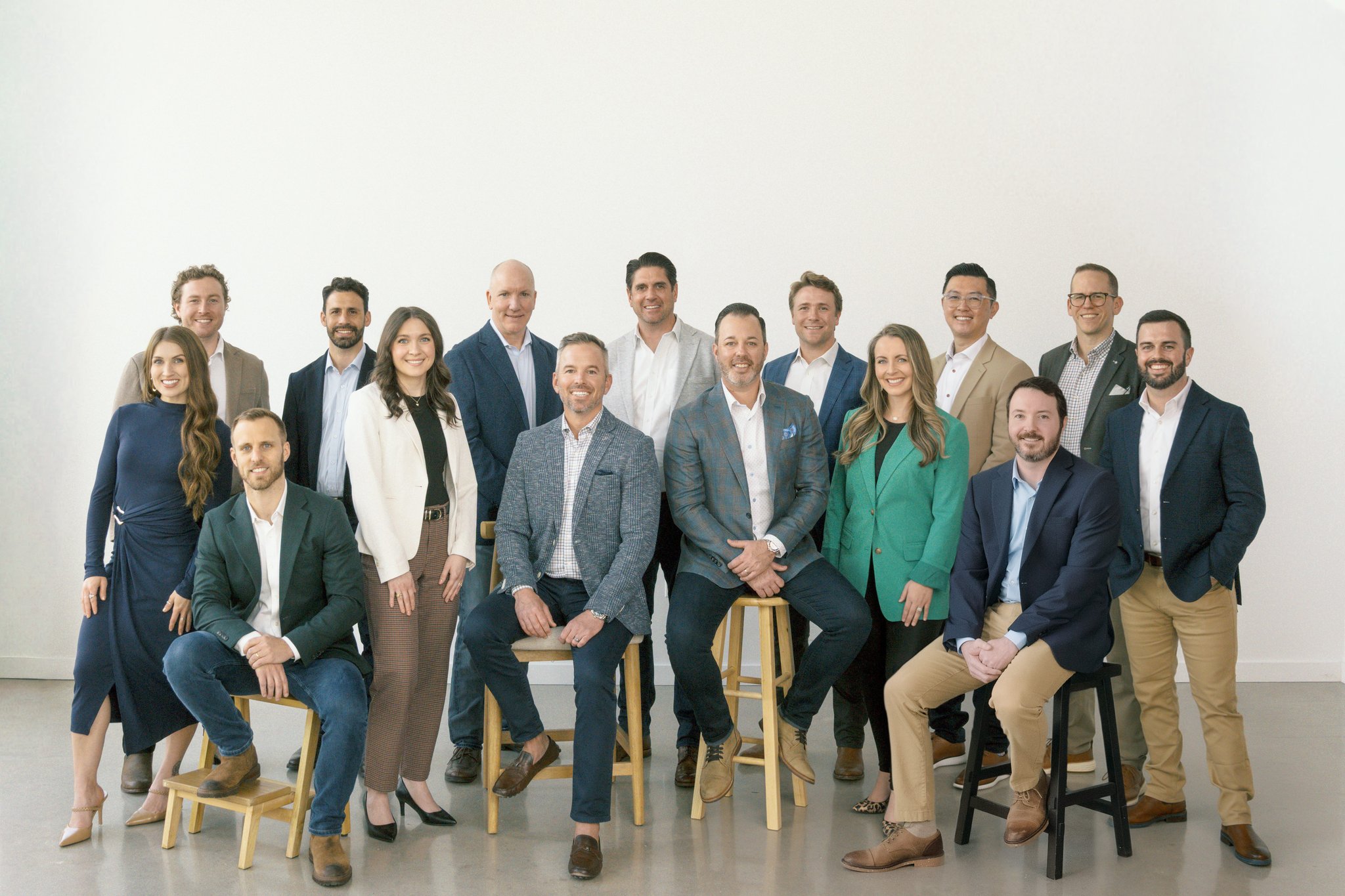
McLerran & Associates is the nation’s largest dental-specific sell-side M&A advisory and brokerage firm and one of the few that runs both transition paths in roughly equal measure. The firm’s track record across approximately 2,000 successful practice sales and roughly $2 billion in closed transaction volume reflects a repeatable process rather than a series of fortunate outcomes.
Four mechanisms drive that process:
-
Diligence-grade EBITDA valuation. A CPA-led analysis unpacks every add-back before the deal goes to market, so the number can hold under buyer scrutiny and the deal is less likely to be re-traded in due diligence.
-
Structured competition. A 45–60-day auction-style process generates around 10 offers from a vetted buyer pool, with poorly run DSOs blacklisted before they ever reach the table.
-
50/50 pathway expertise. Because McLerran works private-buyer and DSO deals in roughly equal measure, it can produce a true side-by-side valuation, which single-lane brokers typically cannot provide.
-
Sell-side only. McLerran represents only the seller, so its incentives stay fully aligned with the selling doctor.
The result is an approximately 85–90% transaction rate among McLerran’s clients, compared with an industry norm closer to 35–40%. McLerran does not simply list practices; it focuses on closing them.
Brian Carroll leads McLerran’s Phoenix office, covering the Mountain West. He and the broader McLerran team bring over 100 years of collective dental-industry experience as former investment bankers, practice-finance lenders, DSO buyers, CPAs, and advisors.
Start the conversation about your practice transition by calling (512) 900-7989, emailing info@dentaltransitions.com, or visiting dentaltransitions.com/contact-us.
Frequently Asked Questions
What EBITDA multiples can Arizona dental practices expect in 2026?
Multiples in 2026 vary by practice size, specialty, associate depth, and buyer type, and they should be viewed as ranges rather than fixed promises. General dentistry practices in the $1.5M–$3M revenue range that generate $1M–$3M in adjusted EBITDA can attract regional DSO add-on buyers at multiples in the mid-to-upper single digits. Specialty practices, particularly oral surgery, orthodontics, and pediatric dentistry, can command meaningfully higher multiples in competitive processes.
Practices where the owner performs the large majority of production may see a valuation reduction due to concentration risk, while practices with associate doctor depth and strong hygiene retention tend to attract premium offers. A diligence-grade EBITDA analysis, rather than a quick free estimate, is usually the only way to understand your specific number.
How much of a DSO deal is paid in cash versus equity in Arizona?
Most DSO deals in 2026 structure consideration as a combination of cash at close, rollover equity reinvested into the DSO platform, and an earnout tied to post-close performance. Cash-at-close percentages can range widely depending on the buyer type and practice profile, and regional roll-ups active in Arizona markets may offer higher cash-at-close percentages than some national platforms.
Rollover equity, which is the portion reinvested into the DSO, remains illiquid until the platform recapitalizes or exits, which typically occurs 3–7 years after the initial transaction. As much as 40% of a deal’s total consideration can be in equity, which is why McLerran helps owners evaluate the DSO’s financial health, management team, and private equity backing before they accept any offer.
How long will I have to keep working after selling my Arizona practice?
The answer depends on the path you choose. In a private-buyer walk-away sale, the typical work-back period is 4–8 weeks, which usually provides enough time to introduce the buying dentist to patients and staff. In a DSO affiliation, a contractual post-close employment commitment of 3–5 years is common, with compensation structured as a percentage of collections rather than the owner-level distributions you currently receive.
Some DSOs are requiring minimum 5-year terms in 2026 due to clinical continuity concerns. The length and terms of the work-back period, including schedule, compensation structure, and exit rights, are negotiable, and McLerran negotiates them on your behalf before the letter of intent is signed.
Should I sell to a private buyer or a DSO, and how do I decide?
The right path depends on your practice’s size and profitability, your personal reasons for selling, and how you weigh cash-at-close certainty against potential long-term equity upside. Smaller premier practices often fit a doctor-to-doctor sale. The largest practices tend to align with the DSO path. Owners in the $1.5M–$3M revenue middle can often pursue either.
Because McLerran works both markets in roughly equal measure, it can produce a true side-by-side valuation that quantifies your practice’s potential value in both the private-buyer and DSO markets. That comparison can help you choose a path with fuller information rather than a guess.
Conclusion: Next Steps for Arizona Practice Owners
Selling a dental practice is a once-in-a-lifetime decision made in a market filled with sophisticated buyers who negotiate every week. The four-part journey, Understand Your Options, Create Competition, Find The Right Fit, and Maximize Your Outcome, forms the framework McLerran & Associates uses to help Arizona practice owners navigate that landscape.
The process starts with a diligence-grade EBITDA valuation that shapes the narrative around your practice’s true profitability. It continues through a structured competitive process that generates real offers from vetted buyers. It narrows to the buyer whose strategy, structure, and support model align with what you want for your practice after you step away. It then concludes with multi-year financial forecasting that shows you, in after-tax dollars, what each path can produce across a 3-, 5-, 7-, or 10-year horizon.
Owners of premier Arizona dental practices who are weighing a private-buyer versus DSO exit can treat the next step as a conversation rather than a commitment. Start the conversation about your practice transition with McLerran & Associates by calling (512) 900-7989, emailing info@dentaltransitions.com, or visiting dentaltransitions.com/contact-us to discuss your practice, your goals, and what the 2026 Arizona market may look like for an owner in your position.