
Key Takeaways
-
Normalized EBITDA is the foundation of practice value. Defensible add-backs can add up to 7x their value to your sale price.
-
California’s SB 351 and AB 1415, effective January 1, 2026, require compliant PC/MSO structures and 90-day OHCA notice for many DSO deals.
-
Reducing owner dependency by shifting production to associates and improving hygiene metrics can meaningfully increase your EBITDA multiple.
-
Deal structures now typically include cash, rollover equity, and earnouts. Understanding tax implications and buyer strength can be essential.
-
McLerran & Associates provides CPA-led valuations, California regulatory insight, and a competitive auction process. Schedule a free, confidential discovery call to explore your options.
Normalized EBITDA: The Starting Point for Your Practice’s Value
Normalized EBITDA is your practice’s earnings before interest, taxes, depreciation, and amortization, adjusted to remove owner-specific, non-recurring, or discretionary expenses. This adjustment presents the clearest picture of operating profit that a buyer would inherit after the sale.
DSOs value practices based on a multiple of EBITDA. Your goal is to present a clean, defensible EBITDA number. Add-backs such as discretionary expenses, one-time costs, and owner perks can significantly increase EBITDA and, therefore, your sale price. At a 7x EBITDA multiple, every $1 of accepted add-back adds $7 of enterprise value, so a $100,000 defensible add-back can add $700,000 to your enterprise value. A CPA-led analysis can help uncover every legitimate add-back before buyers review your financials.

Common add-backs in dental practice sales can include:
-
Above-market owner compensation normalized to a market-rate associate wage
-
Personal vehicle leases or other personal expenses run through the practice
-
Family members on payroll above market rate
-
One-time legal, consulting, or transaction fees
-
Non-recurring equipment purchases or facility costs
However, not all add-backs are created equal. Unsupported add-backs can collapse quickly once buyers request payroll records, invoices, tax returns, and practice-management reports. Every add-back must be real, traceable to specific ledger transactions, and documented with supporting materials. This is why you should be wary of “free” valuations from DSOs, which often serve as lead magnets with numbers that may not hold up in diligence. Instead, a diligence-grade valuation, the kind McLerran & Associates builds with its CPA-led team, can be essential to defend your number when buyers scrutinize it.
California Valuation Drivers: Payer Mix and Owner Dependency
California’s dental market has several characteristics that can meaningfully affect valuation. Two factors that often stand out are payer mix and owner dependency.
Payer mix matters because DSOs tend to prefer practices with a higher percentage of commercial insurance or fee-for-service patients. A commercial or PPO-heavy payer mix can add approximately 0.5x to the EBITDA multiple, while heavy Medicaid or HMO concentration, at 40% or more of collections, can compress the multiple by 0.5x to 1.0x.
Owner dependency is equally important. Practices where the owner performs 90% or more of production can face a 10–20% valuation reduction because of transferability risk. Practices with higher EBITDA and lower owner dependency can often command stronger multiples, although the exact multiple depends on your specific numbers, market conditions, and buyer competition. California’s regulatory environment, particularly SB 351, can also influence buyer appetite, so sellers benefit from having compliant structures in place before going to market.
California Rules for DSO Deals: SB 351, AB 1415, and Aspen Dental
California Senate Bill 351, effective January 1, 2026, codifies California’s corporate practice of dentistry doctrine and expressly prohibits private equity groups and hedge funds from interfering with a dentist’s clinical judgment. The law addresses both direct interference and indirect control exercised through management agreements, MSOs, or other contractual arrangements.
SB 351 prohibits covered investors and entities from interfering with or controlling:
-
Clinical decision-making, including diagnoses, referrals, and treatment decisions
-
Patient volume, scheduling, or hours worked
-
Hiring, firing, or supervising clinical personnel based on clinical competence
-
Ownership or control of patient medical records
-
Billing, coding, reimbursement strategies, or payer contracting
-
Selection of medical equipment, supplies, or pharmaceuticals
SB 351 also voids non-compete and non-disparagement clauses in MSO and asset-purchase agreements between private equity groups or hedge funds and dental practices, including existing agreements signed before January 1, 2026. The California Attorney General is expressly authorized to enforce these restrictions through injunctive relief, equitable remedies, and attorney’s fees.
Separately, AB 1415, also effective January 1, 2026, requires certain investor entities, including private equity groups, hedge funds, MSOs, and newly formed acquisition vehicles, to submit at least 90 days’ advance written notice to the Office of Health Care Affordability (OHCA) before completing covered transactions. OHCA can initiate a Cost and Market Impact Review that may substantially delay closing, so sellers and their advisors benefit from building this timing into deal planning.
How the PC/MSO Structure Works in California
In California, most DSO transactions use a 2-entity structure. A dentist-owned professional corporation (PC), formed under California Corporations Code § 13401.5, holds the clinical practice and must be at least 51% owned by California-licensed dentists. A separately owned management services organization (MSO), typically a California LLC owned by the non-licensee buyer, provides non-clinical administrative services to the PC under a management services agreement (MSA).
The MSO cannot employ clinical staff, make clinical decisions, control patient records, or bill patients directly for dental services. The MSA’s services scope should be specific and aligned with what the MSO actually delivers. Narrow, accurate descriptions reduce the risk that regulators view the MSO’s scope as including clinical functions it cannot lawfully perform.
A practical compliance checklist for your DSO sale can include:
-
Confirm PC ownership by California-licensed dentists at or above 51%
-
Verify that the MSO does not interfere with clinical judgment or control patient records
-
Review all agreements for SB 351 compliance, including non-compete and non-disparagement provisions
-
Have legal counsel review the MSA for prohibited control provisions, such as assignable option agreements and revenue-based fee structures
-
Confirm that the MSO fee structure is supported by a documented fair market value analysis
-
Assess whether AB 1415’s 90-day OHCA notice obligation applies to your transaction
Reducing Owner Dependency and Strengthening Operations
DSOs often pay a premium for practices that do not rely on the owner for most daily clinical production. Associate-led production, where the owner performs less than 70% of chair time, can be one of the highest-leverage de-risking variables in dental M&A. This shift can add meaningfully to the EBITDA multiple. When the owner produces the vast majority of clinical revenue, buyers frequently apply a valuation discount because of transferability risk.
Actionable steps to reduce owner dependency before a sale can include:
-
Hiring and training associate dentists to take over a meaningful share of clinical production
-
Delegating management tasks to a practice administrator
-
Standardizing clinical protocols so care quality is consistent across providers
-
Improving hygiene department efficiency and recall systems
Beyond owner dependency, operational benchmarks also influence how DSOs view your practice. The 50-40-30 Rule is a dental industry benchmark where staff costs should not exceed 50% of collections, total overhead should stay below 40%, and doctor compensation should be at least 30% of collections. Practices that meet these metrics often signal stability and scalability. Hygiene revenue above 30% of collections is associated with premium multiples and stronger DSO interest.
The 80/20 Rule in this context means no single provider should produce an outsized share of clinical revenue. Diversification across providers reduces key-person risk and can support a stronger valuation. In California, when hiring associates, practices also need to follow state labor laws and consider how associate production affects EBITDA normalization before going to market.
Deal Structure Deep Dive: Cash, Equity, and Earnouts
A typical DSO deal includes a mix of cash at close, rollover equity, and an earnout. Understanding how each piece works can help you focus on total outcome rather than only the headline number.
Cash at close is the portion wired on closing day. Cash-at-close percentages in dental practice deals have shifted in recent years, with a greater share of consideration moving into deferred components. This trend makes it more important to understand what you actually receive on day one.
Rollover equity means a portion of your deal is paid in equity in the acquiring organization rather than cash. In DSO transactions, rollover equity is effectively standard, with cash at close typically in the range of 60–75% and the remainder in equity and earnout components. Equity can be held at the joint-venture (JV) level or at the holding-company level. JV equity offers distributions and a higher floor but a lower ceiling. Holding-company equity offers no distributions, but a higher ceiling that can multiply if the DSO is later sold or recapitalized.
Earnouts are contingent payments tied to future performance. Many sellers prefer non-punitive terms, such as pro-rata provisions, so a near-miss on an EBITDA target still pays most of the earnout rather than forfeiting it entirely.
Tax implications can significantly affect your net proceeds. A substantial portion of a DSO deal, often the goodwill component that can represent 76% or more of purchase price, can qualify for long-term capital gains rates rather than ordinary income rates. A dental-specific CPA can help you evaluate deal structure and purchase price allocation before you sign.
Because as much as 40% of your deal can be in equity, you benefit from underwriting the DSO like an investment. Key questions include whether the whole company is profitable, whether revenue is still growing at existing offices, and whether the management team is strong and experienced. McLerran & Associates helps you vet buyers as investments and not only as counterparties. The table below summarizes the trade-offs among common deal structures so you can compare cash, equity, risk, and upside at a glance.
|
Structure |
Cash at Close |
Equity Component |
Risk Profile |
Upside Potential |
|---|---|---|---|---|
|
Cash-heavy |
Higher |
Lower |
Lower |
Limited |
|
JV equity |
Moderate |
Moderate |
Moderate |
Moderate (distributions) |
|
Holding-company equity |
Lower |
Higher |
Higher |
High (multiple expansion) |
Preparing 12 Months Before a DSO Sale
Starting preparation early gives you more room to improve value. Many advisors view 12 to 18 months before a sale as a practical planning window. The following sequence reflects the preparation approach McLerran & Associates often recommends for California sellers targeting a DSO transaction.
Months 1–3: Engage a sell-side advisor and CPA to conduct a diligence-grade valuation and EBITDA normalization analysis. Begin cleaning up financials, documenting add-backs, and identifying any SB 351 or AB 1415 compliance issues in existing agreements.
Months 4–6: Implement operational improvements. Reduce owner dependency by onboarding or expanding associate production, improve hygiene metrics and recall systems, and standardize clinical protocols. Address any lease issues. Many sellers aim for at least 5 to 7 years of lease term remaining or a clean renewal option before going to market.
Months 7–9: Prepare a marketing profile and virtual data room. Begin quiet, confidential outreach to a vetted pool of buyers. Confirm that your PC/MSO structure is compliant and documented before any buyer reviews your financials.
Months 10–12: Run a competitive bid process, negotiate the letter of intent (LOI), and move toward closing. McLerran & Associates often generates around 10 offers per listing through a structured, auction-like process lasting approximately 45–60 days.
Why Many Sellers Choose a Dental-Specific Sell-Side Advisor
McLerran & Associates is the nation’s largest dental-specific sell-side M&A advisory firm. The firm has completed roughly 2,000 successful practice sales, closed approximately $2 billion in transaction volume, and evaluated more than 10,000 practices. Its transaction rate is roughly 85–90%, compared with an industry norm closer to 35–40%.
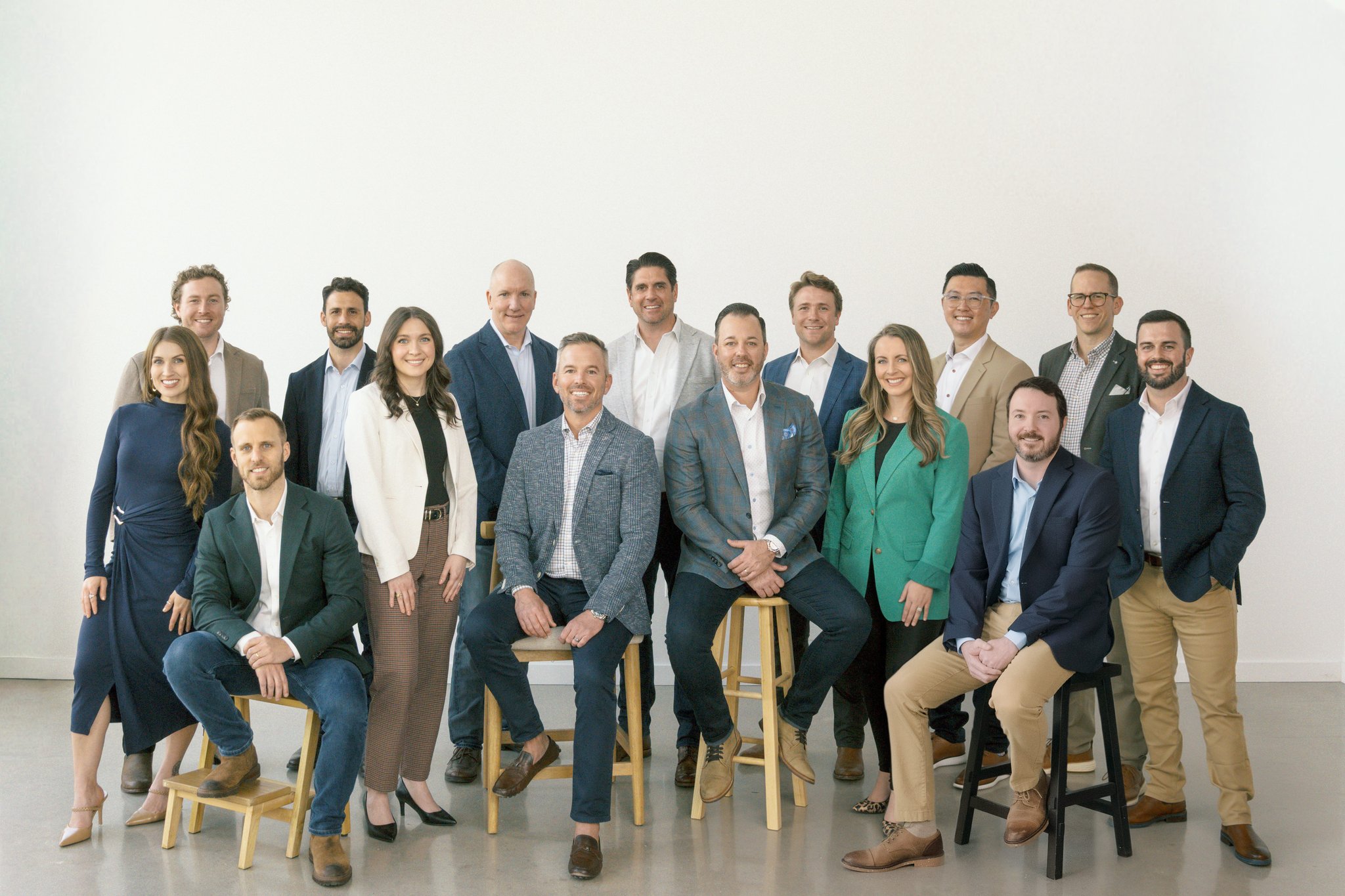
What McLerran & Associates delivers for California DSO sellers includes:
-
CPA-led EBITDA analysis that holds up in diligence and is less likely to be re-traded when buyers scrutinize the numbers
-
A competitive auction process of typically 45–60 days, generating around 10 offers, which can lift valuations approximately 30% over selling alone
-
A roughly 50/50 split between private-buyer and DSO deals, giving you a true side-by-side comparison that single-lane brokers cannot provide
-
California expertise through the Los Angeles office led by Steven Au, with detailed knowledge of SB 351, PC/MSO compliance, and the California buyer landscape
-
Quality-of-earnings defense during diligence so the agreed value has a stronger chance of holding when the buyer’s team reviews your practice
Together, these capabilities create a comprehensive sell-side engagement that supports your value at each stage of the process.
Dr. William Pena, a pediatric dental group owner who had already received offers before engaging McLerran & Associates, achieved a valuation roughly 20% higher than those offers after the firm conducted a detailed EBITDA analysis and controlled the narrative with buyers throughout the negotiation.
Schedule a free, confidential discovery call with McLerran & Associates to discuss your practice, goals, and options.

Common Pitfalls for California DSO Sellers
California dental practice owners preparing for a DSO sale often encounter avoidable mistakes that compress value or delay transactions.
-
Accepting a free valuation from a DSO. An unsolicited offer often anchors expectations based on what your practice is worth to that buyer. A CPA-led valuation that holds up in diligence can provide a more reliable baseline.
-
Talking to only one DSO. Without competitive tension, you have limited leverage. A structured process with multiple vetted buyers can improve both terms and price.
-
Overlooking SB 351 compliance. Legal counsel can review your PC/MSO structure and existing agreements before you go to market. Pre-2026 agreements with non-compliant provisions may now be void and unenforceable.
-
Delaying efforts to reduce owner dependency. Hiring associates and delegating management tasks at least 12 months before sale can reduce transferability risk and support a stronger multiple.
-
Underestimating equity and tax implications. A dental-specific CPA can explain deal structure, purchase price allocation, and the difference between long-term capital gains and ordinary income treatment before you sign an LOI.
-
Missing the AB 1415 notice window. When your buyer involves private equity or hedge fund capital, the 90-day OHCA notice obligation may apply. Discovering this after LOI signing can extend closing by several months.
Frequently Asked Questions
How does SB 351 affect my dental practice sale in California?
SB 351, effective January 1, 2026, codifies California’s corporate practice of dentistry doctrine and prohibits private equity groups and hedge funds from interfering with your clinical judgment. The law bars covered investors from controlling clinical decision-making, patient scheduling, hiring and firing of clinical staff based on clinical competence, patient records, billing and coding decisions, and equipment selection. It also voids non-compete and non-disparagement clauses in MSO and asset-purchase agreements between private equity or hedge fund entities and dental practices, including agreements signed before January 1, 2026. The California Attorney General can enforce these restrictions through injunctive relief and attorney’s fees. For sellers, this environment means your deal structure benefits from being compliant before you go to market, and existing agreements should be reviewed by legal counsel for provisions that are now void and unenforceable.
What is the 50-40-30 rule in dentistry, and why does it matter for a DSO sale?
As mentioned earlier, the 50-40-30 rule sets benchmarks for staff costs, overhead, and doctor compensation. Hitting these metrics often signals stability and efficiency to DSO buyers. Hygiene production above 30% of collections can be especially meaningful because it indicates recurring patient demand, strong recall systems, and a durable revenue base that does not rely entirely on the owner’s clinical production. Improving hygiene metrics in the 12 months before going to market can be a practical way to strengthen your valuation story.
Can I get a mostly-cash deal in California in 2026?
The mix of cash and equity depends on your practice profile and the buyer. A high cash-at-close percentage can be harder to achieve in California today given regulatory uncertainty around SB 351 and the Aspen Dental settlement, yet it can still be feasible in certain situations. Practices with a strong commercial payer mix, low owner dependency, and clean financials may see more cash-heavy offers. McLerran & Associates understands which buyers in the California market tend to offer more cash at close versus heavier equity components and can help you focus on the right buyer pool for your priorities. A competitive process allows you to compare offers across multiple buyers instead of accepting the first structure presented.
What is the difference between JV equity and holding-company equity in a DSO deal?
In a DSO transaction, rollover equity, meaning the portion of your deal paid in ownership rather than cash, can be structured at two different levels. Joint-venture (JV) equity is held at the level of the individual practice or regional group and typically pays distributions to the seller on an ongoing basis. This structure offers a higher floor because you receive income while you wait for a liquidity event, but a lower ceiling because your upside is limited to the performance of your specific location or group. Holding-company equity is held at the level of the DSO’s parent organization. It typically pays no distributions, but if the DSO is later sold or recapitalized, the upside can multiply significantly. The right choice depends on your financial goals, your view of the DSO’s growth trajectory, and how much near-term liquidity you prefer. McLerran & Associates produces multi-year financial forecasting across deal structures so you can compare real after-tax outcomes before deciding.
What did the Aspen Dental settlement mean for California dental practice owners and DSOs?
As discussed earlier, the Aspen Dental settlement imposed significant penalties and a multi-year compliance monitor. The key takeaway for sellers is that the California Attorney General can actively enforce corporate practice laws. Any DSO deal structure that gives the management organization effective control over clinical operations, ownership succession, or revenue-based fee arrangements can draw attention. Sellers benefit from structuring deals with compliant PC/MSO arrangements and having healthcare transaction counsel review documents before signing an LOI.
Take Control of Your Practice’s Value
Maximizing your dental practice’s value for a DSO sale in California calls for a disciplined, California-specific approach. Normalizing your EBITDA with defensible add-backs, reducing owner dependency before going to market, structuring your deal in line with SB 351 and the lessons of the Aspen Dental settlement, and understanding the economics of cash, equity, and earnout components can all play a role. The stakes and regulatory complexity often exceed what a solo effort or a generalist broker can comfortably manage.
McLerran & Associates is a focused sell-side advisor for California dental practice owners, with experience, a broad buyer network, a CPA-led valuation process, and California-specific insight that can help you pursue a strong outcome.
Ready to explore your options and next steps? Schedule a free, confidential discovery call with McLerran & Associates. Call (512) 900-7989, email info@dentaltransitions.com, or visit our contact page.